

Anxiety can be overwhelming, often leading us to make choices that provide immediate relief but unintentionally keep us stuck. In fact, in order to avoid anxiety, many people fall into the anxiety avoidance cycle–a pattern where they steer clear of situations, people, or experiences that trigger distress. While avoidance may bring temporary relief, it reinforces anxiety in the long run, making life feel smaller and more restricted.
At The Center for Effective Treatment, we see this pattern every day. People arrive having narrowed their lives to reduce discomfort. They may avoid social situations, skip steps at work, refuse travel, limit activities with family, or refuse to bring up problems that matter. In other words, short-term relief becomes long-term restriction. Our work begins with clarifying that this is a predictable learning process in the brain rather than a personal failing. From there, we build a plan that addresses the roots of anxiety and gives clients tools to face situations in ways that reduce the urge to avoid.
This article explains what the anxiety avoidance cycle is, why spotting the cycle helps, and the precise steps we use with clients who want to move past avoidance. It also shows how therapies like EMDR and DBT can fit together with a careful exposure plan so that change occurs in a steady, manageable way.
What is the Anxiety Avoidance Cycle?
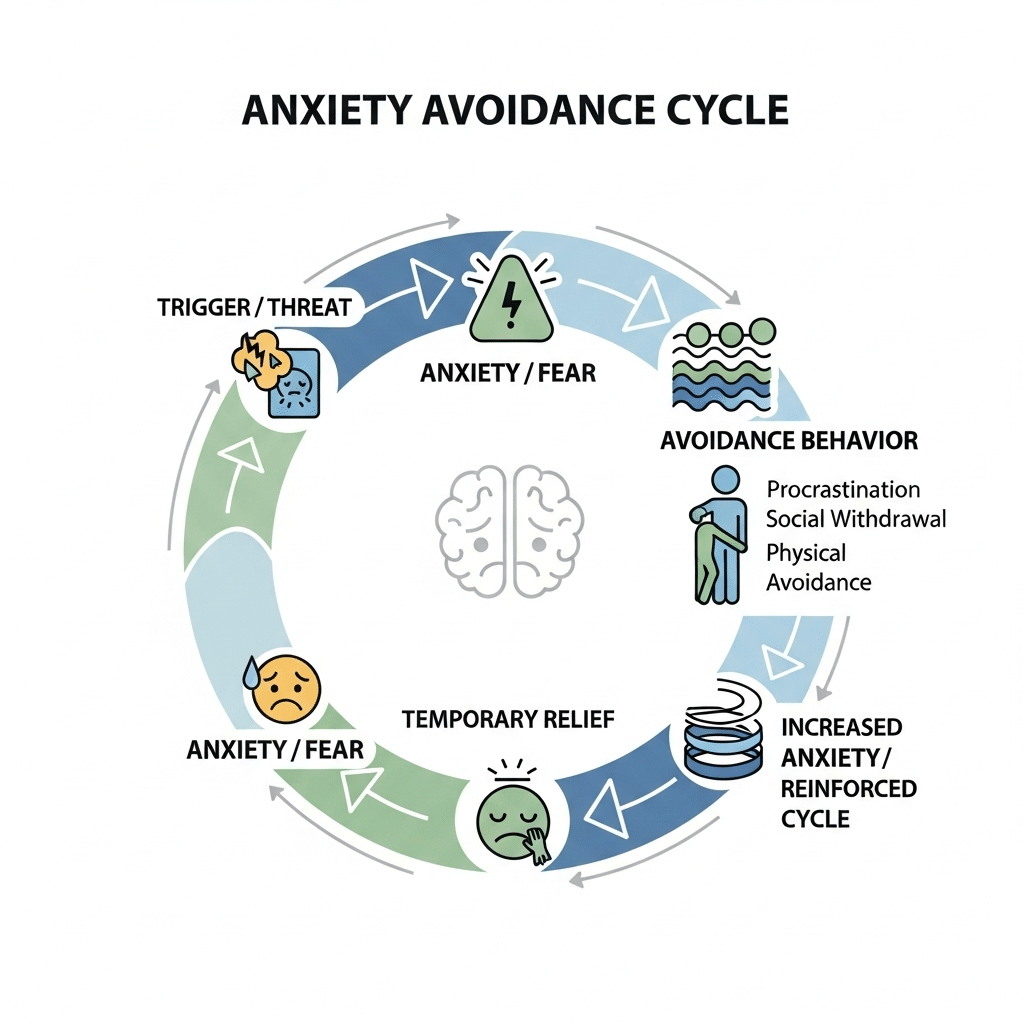
The anxiety avoidance cycle is a loop that forms because the brain learns quickly which actions reduce discomfort. The loop looks like this: a trigger appears, anxiety rises, avoidance follows, immediate relief occurs, and that relief teaches the brain that avoidance works. Each repetition strengthens the link between trigger and avoidance.
Below are two concrete examples that show how subtle this can be.
– Scenario One: Someone who has a panic attack while driving may choose to stop driving. The next day, that person might take a taxi and feel calmer. Because the taxi prevented the panic, the brain treats taxis as “safe.” Over time, driving becomes more frightening. The safe behavior (taking a taxi) keeps that deep-seated fear alive.
– Scenario Two: A person skips a party to avoid feeling judged. Relief arrives in the short term, but every missed event reduces opportunities to learn that social situations can go well. The fear grows, and so does the instinct to withdraw.
Avoidance takes many forms. It can be outright refusal, gradual shrinking, overplanning, or constant rehearsing to avoid surprises. All those tactics serve the same function: reduce immediate distress. Yet they also remove opportunities to learn that the feared outcome is unlikely or manageable. Recognizing the cycle is the first step toward change because it reveals that the short-term benefit comes with a long-term cost.
Why is it so Important to Understand this Cycle?
Once the pattern is visible, change becomes practical. People often tell us they tried “positive thinking” or “toughing it out” and felt worse afterward. Those attempts miss the learning process that keeps anxiety on autopilot. Seeing the cycle gives a clear target: stop reinforcing avoidance while increasing safe, controlled chances to learn a different outcome.
Understanding the cycle also shifts how people feel about themselves. When avoidance is framed as a survival tactic the nervous system learned, shame loosens. That reduction in shame helps people stay engaged with treatment instead of dropping out because they feel broken.
Clinically, knowing the cycle helps guide treatment choices. If avoidance is linked to a traumatic memory, processing that memory removes a powerful driver of avoidance. If avoidance happens because someone lacks coping skills, teaching skills reduces the urge to flee. If avoidance persists despite therapy, a structured exposure plan helps the nervous system gather new evidence. Each intervention fits a specific part of the cycle. This clarity makes treatment more efficient and more likely to stick.
Our Approach on How to Break the Cycle of Anxiety
At The Center for Effective Treatment, our targeted, tailored approach combines therapies and strategies that target both the roots of anxiety and the behaviors that keep it alive. Below, we list the primary methods we use to help our clients tackle anxiety.
1. EMDR Therapy
EMDR (Eye Movement Desensitization and Reprocessing) is a therapy that helps the brain reprocess memories that still carry a strong emotional charge. Many clients with persistent avoidance have one or more unresolved experiences that act like triggers. When those memories remain high in emotional intensity, present-day situations can feel dangerous even when they are not. EMDR is one of many trauma treatment techniques that can help.
EMDR therapy changes how those memories are stored and experienced. The result is often a meaningful drop in the emotional reaction that used to come with the memory. When memories lose their intensity, the situations that were previously avoided no longer seem as threatening. That reduction in fear opens the door to practicing new behaviors.
EMDR is a focused therapy, and we typically use it when there is a clear memory or cluster of memories linked to the patterns of avoidance. Sessions follow a structured protocol and include stabilization skills so clients feel safe throughout the process.
2. DBT Therapy
DBT (Dialectical Behavior Therapy) gives clients a set of skills they can use the moment anxiety rises. We offer DBT for anxiety, which helps clients learn to manage the distress and urges to escape that anxiety creates. The skills fall into practical categories: mindfulness, distress tolerance, emotion regulation, and interpersonal effectiveness. Learning these skills reduces the need to escape. Our focus on DBT for emotion regulation gives clients concrete tools to handle strong feelings without resorting to avoidance.
We teach DBT skills in individual sessions and in group settings. DBT groups let clients practice strategies like paced breathing, checking facts, opposite action, and assertive communication with peers. Group therapy helps these skills generalize into daily life because participants receive immediate feedback, try out approaches in low-stakes role plays, and see how others handle similar challenges.
For someone who habitually avoids, learning to notice an urge and ride it without acting out can change decisions when they matter most. DBT’s coaching model also supports real-world application between sessions, so skills are available when anxiety rises.
3. Gradual Exposure with Support
Exposure is the mechanism that teaches the nervous system new information: feared situations are survivable and sometimes harmless. Many people picture exposure as a single dramatic event, yet most effective exposure is stepwise, planned, and brief.
We build exposures from the ground up. The plan begins with a careful inventory of feared situations, rated by intensity. Early steps may be imaginal or very brief real-world tasks that feel manageable. As a person gains confidence, the steps grow. We pair exposure with the skills learned in DBT so the person has tools to manage distress in the moment.
The therapist guides and calibrates each step. That support keeps progress steady and prevents the discouragement that can come from pushing too fast. Over repeated safe experiences, avoidance weakens, and life expands.
4. Seeing a Therapist
Working with a clinician experienced in these methods is itself a key step in how to break the cycle of anxiety. At The Center for Effective Treatment, we begin with a thorough assessment that maps triggers, avoidance patterns, and any contributing memories. From there, we build a plan that may include one or more of the approaches above.
Therapist support provides structure, coaching, and safety checks. We track progress, adjust plans when needed, and help clients manage setbacks so temporary relapses do not derail long-term gains. Our goal is to make the process clear and to give clients concrete markers of progress rather than vague encouragement.

Who Can We Help Break the Cycle of Anxiety?
The anxiety avoidance cycle appears in many diagnoses and life situations. Our practice supports adults and adolescents who face social anxiety, panic disorder, phobias, generalized anxiety, trauma-related avoidance, and more. We also work with folks who have tried treatments before without lasting change.
People who carry avoidance into work, family roles, or health behaviors benefit from a combined approach that addresses both memories and skill gaps. Those with overlapping issues — for example, trauma plus panic — often need both memory-processing work and skill training. We coordinate care so these elements fit together rather than compete.
Our clinicians have experience with complex cases and with clients who feared they were untreatable. We make plans that are realistic, measurable, and focused on returning clients to the activities and relationships they value.
For Those Who Thought They Were Untreatable, We’re Here for You
Breaking the anxiety avoidance cycle takes time, practice, and guided support. At The Center for Effective Treatment, we combine specialized therapies and practical skills so clients regain confidence in facing life’s challenges. If avoidance has narrowed your choices or made everyday tasks feel risky, we will work with you to identify the drivers of avoidance and create a clear plan to move forward.
If you want to talk about a personalized strategy for your situation, reach out. We’ll listen, assess, and explain the treatment options that fit your needs. Together, we will take steady steps toward breaking the cycle so you can live a more vibrant, enjoyable life. Schedule a consultation today.